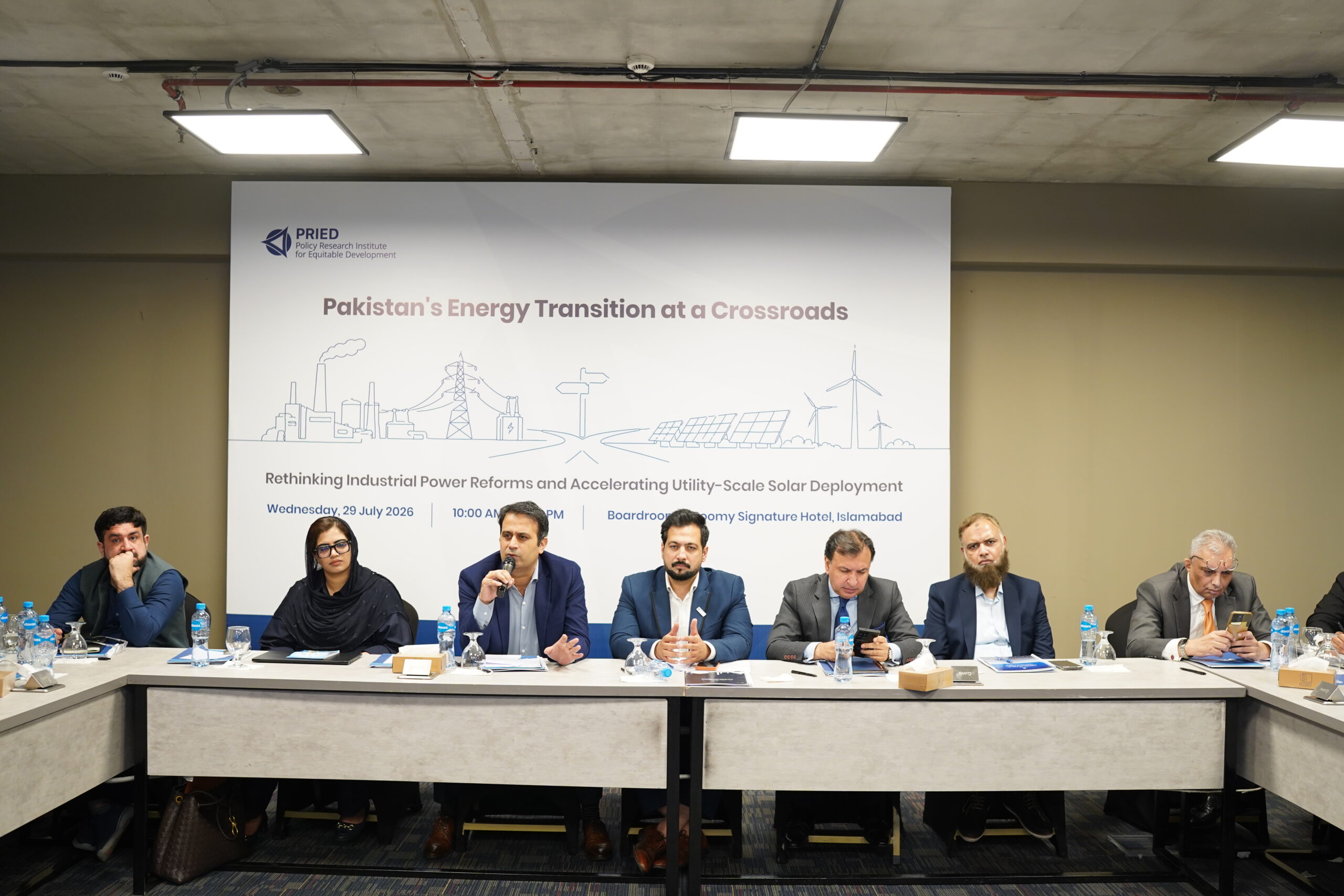
Pakistan’s energy sector is at a structural crossroads. Faced with persistent circular debt, rising energy costs, industrial competitiveness concerns, and increasing climate and energy security risks, the country is pursuing a series of reforms aimed at restoring the financial sustainability of the power sector while trying to accelerate a sustainable transition to renewable energy. Recent policy measures, including the Captive Power Transition Levy and renewed efforts to scale up utility-scale solar deployment, reflect this shift, but also raise important questions about how Pakistan can balance economic growth, affordability, investment, and decarbonisation within an integrated energy transition strategy.
To contribute to this policy dialogue, the Policy Research Institute for Equitable Development (PRIED) is launching two complementary energy monitors. The first assesses the implications of the Captive Power Transition Levy, introduced in January 2025 as part of Pakistan’s reform commitments to the International Monetary Fund (IMF). The study analyses how levy is reshaping industrial electricity demand, the gas sector, and overall energy sector finances, while exploring its implications for industrial competitiveness and the just energy transition.
The second monitor examines the state of utility-scale solar development in Pakistan. Despite possessing one of the region’s strongest solar resources, investment in large-scale solar projects has remained below potential due to regulatory uncertainty, financing constraints, transmission bottlenecks, and institutional barriers. The study identifies these challenges and draws on
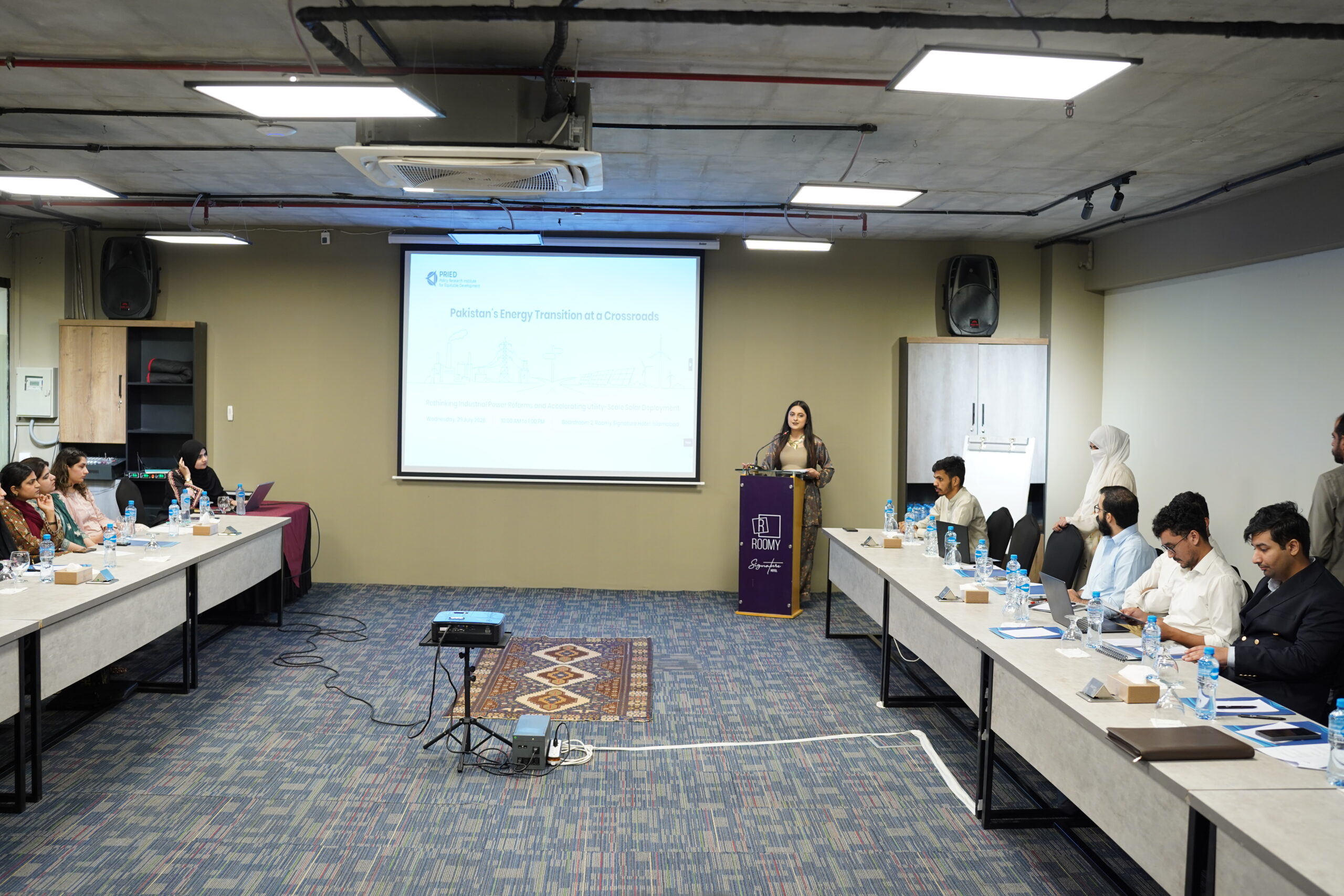
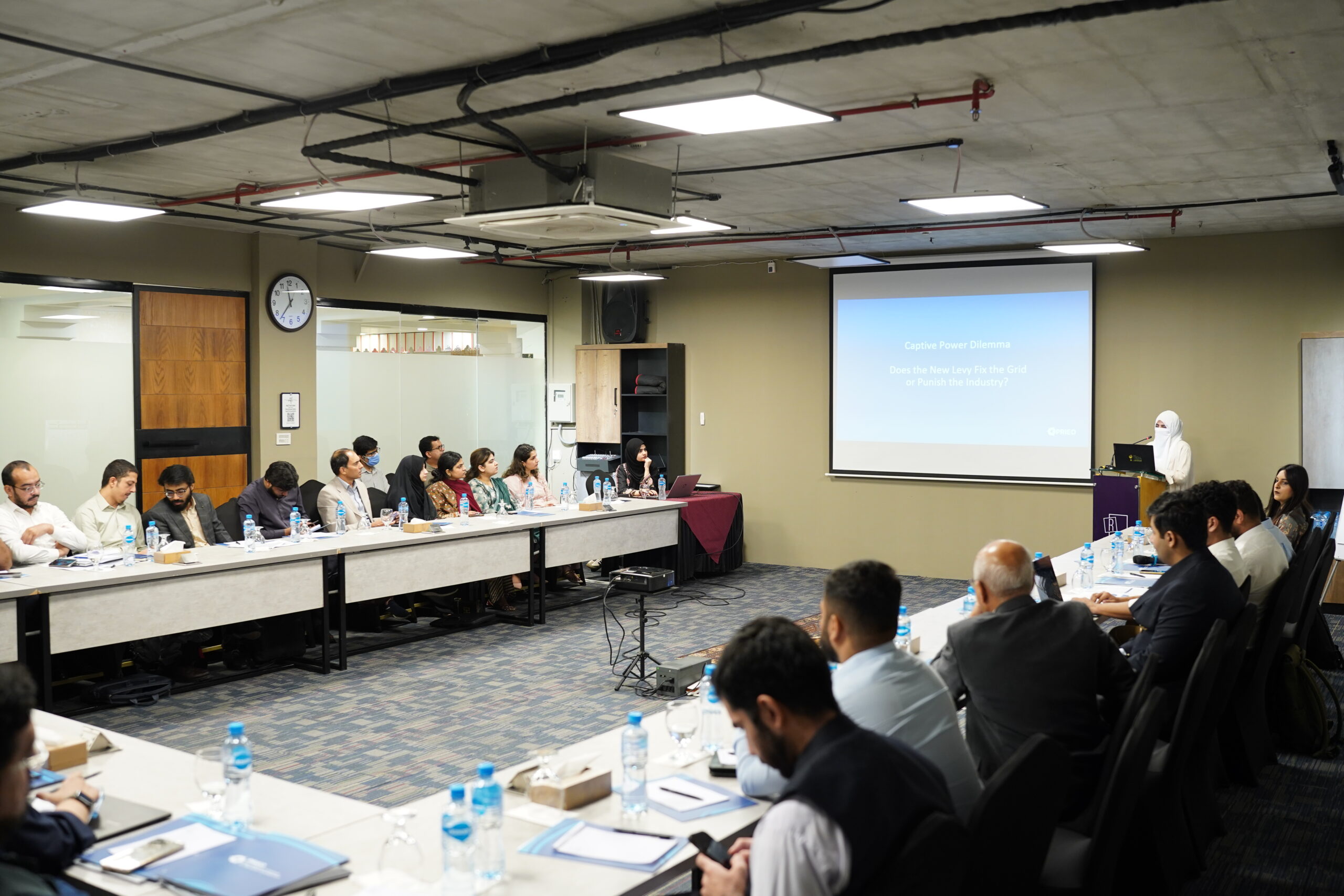
international experience to recommend policy, regulatory, and financing reforms that can unlock private investment, expand competitive procurement, and strengthen Pakistan’s long-term energy security. The launch event will bring together policymakers, regulators, development partners, industry representatives, financial institutions, academics, and energy experts to discuss the findings and policy recommendations emerging from both reports. Through this dialogue, PRIED seeks to promote evidence-based policymaking that supports a resilient and equitable energy future for Pakistan.