
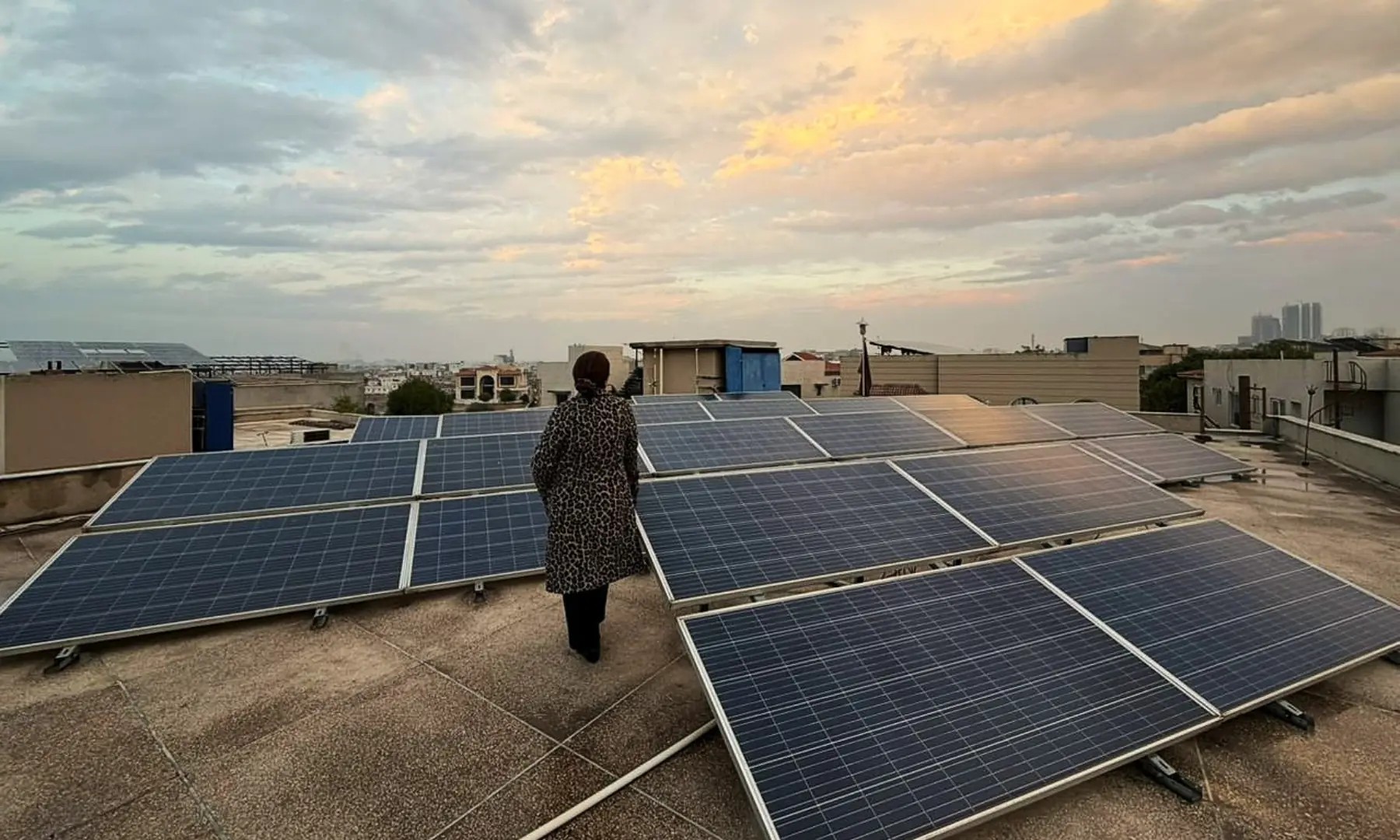
In a quiet Rawalpindi neighbourhood, where the power grid often dictates the rhythm of life, one family has transitioned from stopgap solutions to a more sun-powered reality. Their journey into solar energy was not just a financial calculation, but a response to a two-decade fight with an unreliable power supply.
“It was one hour off and one hour on,” recalls Rubab, a 40-year-old housewife and resident of the Marir Hassan neighbourhood. After struggling with frail UPS batteries for years, she finally invested in solar panels about a year and a half ago — at a high personal cost.
“I sold my gold to buy these solar panels for our home,” she tells Dawn. “Women are expected to make these sacrifices for the household. Even my sister had to install solar on installments, that is the only way families like ours can afford it.”
The decision to shift to solar, she recounts, was both hers and her husband’s, influenced by relatives who had already made the transition. Their purchase, however, was isolated from their understanding of the technical system they had scrambled to secure.
For detailed, please click here